


The Belarusian Investigative Center analyzed supplies from 58 Belarusian companies to 41 Russian arms producers and found that, from February 2022 to August 2025, such shipments were worth at least $1.2 billion. By 2024, their volume had doubled compared with 2022. The suppliers included companies under Belarus’s State Authority for Military Industry, state-owned enterprises, and private firms. BIC found that 29 of the 58 Belarusian suppliers were still not under Western sanctions.
The investigation shows that Belarusian companies delivered products critical for Russia’s defense industry, including wheeled chassis, optics, sights, transport-launch equipment, microchips and other electronics. MZKT supplied chassis and parts to producers of Smerch, Tornado, Iskander, S-400 and S-500 systems. Peleng exported optoelectronic products worth $875 million, including Sosna-U kits and equipment for tanks and armored vehicles. OKB TSP supplied equipment to a producer of Zircon and Oniks missiles.
According to Ukrainian military intelligence, Russia depends on Belarusian optoelectronic systems, sights and guidance units for up to 85% of its needs, wheeled chassis for up to 90%, and transport-launch units for up to 80%. An expert interviewed by BIC said many of these goods have clear military use and help Russia continue its war against Ukraine.
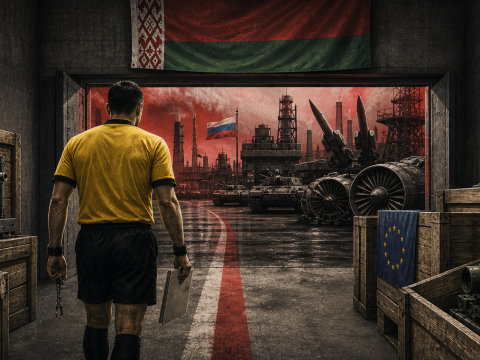
BIC also found a reverse supply chain: Russian companies shipped sanctioned Western-origin goods to some Belarusian enterprises, including products from Germany, Switzerland, the United Kingdom, the United States, Italy and other countries. These goods may support both current supplies and the long-term production capacity of the Belarusian and Russian defense sectors.
Natallia from Nikopol, Ukraine, had one birthday wish: to go on a trip with her husband, Yevhenii, and their son, Danylo. On November 16, 2025, the family celebrated her 36th birthday. The following morning, the husband was the first to wake up. After eating a piece of leftover cake, he kissed his wife and left to teach driving lessons downtown. A few hours later, the shelling began.

An explosion shook the house. When Natallia realized that the strike had hit somewhere nearby, she immediately called Yevhenii. He could not be reached. She asked her son to dial the father’s number, too. Finally, a female EMT answered the phone and said, “You should come over.” At the hospital, Natallia was given her husband’s belongings, including his wedding ring. She asked whether his arms and legs were intact. The reply she heard was: “Yes.”
Natallia learned of her husband’s death from a doctor.
“Our lives were divided into ‘before’ and ‘after,’” she says, barely holding back tears.

Russian troops shelled the town of Nikopol, located on the front line in the Dnipropetrovsk Region, with artillery from occupied Enerhodar. [*] Another woman died as a result of the attack besides Yevhenii. The extract from the register of pre-trial investigations does not specify the type of weapon used. No matter what was fired that day — cannons, howitzers, mortars, or multiple rocket launchers — there is not only a military calculation behind every such strike, but also a long production chain.
The chassis, optics, electronics, and components of Russian military equipment and weapons come from Belarus, among other places. From a source in the logistics sector, the BIC obtained data on deliveries from 58 Belarusian enterprises to 41 Russian arms manufacturers. From February 2022 through August 2025, the value of these shipments totaled at least $1.2 billion. By 2024, the amount had doubled from 2022. In addition to the known military contractors, the BIC found 29 companies that are not yet subject to Western sanctions, even though they are providing supplies that directly enable Russia to continue its attacks on Ukraine.

This investigation was prepared in cooperation with the Ukrainian media Slidstvo.Info and with the support of CyberPartisans and the Rabochy Rukh initiative.
Chassis for Smerch and Iskander
Although news reports mostly talk about drones as the main weapon of choice in the war, Russia also hits frontline cities with conventional weapons almost daily. For example, they use multiple launch rocket systems (MLRS). On certain days, more than 200 strikes per day are launched from such weapons. Given the distance, MLRSs could have been used to shell Nikopol on the day Natallia's husband passed away, says Andrii Kharuk, a Ukrainian military historian and professor at the Hetman Petro Sahaidachnyi National Army Academy.
BelPol previously reported on MZKT's contracts with these Russian companies. The BIC confirmed the shipments and determined their exact volumes.
Andrii Kharuk explained the importance of Belarusian chassis for Russian ADMS and emphasized their quality.
"They [Russian manufacturers — ed. note] cannot fully meet the demand because Russian air defense missile systems are suffering significant losses from Ukrainian strikes. <...> I must take my hat off to Belarusian design engineers because Chinese and North Korean chassis for missile systems are based on Belarusian, Minsk design solutions. So, it's fairly high-quality equipment."
The most recent open data on the owner of MZKT dates back to 2022, when the company was state-owned. In January 2020, Aleksandr Lukashenko named MZKT one of his favorite plants. In August of that year, however, the plant’s workers were chanting “Go away!” when he visited the plant. In December, the Belarusian enterprise was hit with EU sanctions for human rights violations. In May 2025, MZKT was included in the EU sanctions package for the second time for supporting Russia's defense capabilities. Additionally, the company is subject to restrictions in the UK, the US, Canada, Switzerland, Japan, Ukraine, and New Zealand.
Optics and rocket launchers
Andriy Yusov, a representative of the Defence Intelligence of Ukraine, informed BIC that Peleng's products were discovered in samples of seized Russian weapons and equipment. These include Kalina fire control systems in T-90M tanks; Sosna-U thermal imaging sights in T-72BA and T-90S/M tanks; and combined gunner's sights in BTR-82A armored personnel carriers.
The Belarusian state owns a 49% stake in Peleng.
OKB TSP has been under EU sanctions since July 2025. Its sole owner is the Belarus-based ZAT Investycyjnaje Finansavanne.
The current shareholders of the latter could not be identified because Belarus does not provide information on joint-stock companies. TUT.BY linked OKB TSP to Siarhei Batsianouski, who is the son-in-law of former Prime Minister Sergey Ling.
The BIC discovered that Batsianouski did work at Investycyjnaje Finansavanne until at least May 2024 and at OKB TSP until the end of 2023. He was also a co-owner of the latter from 2003 to 2017. [*] [*] [*]
Additionally, until at least 2006, he was the head of the Belarusian representative office of the Russian Corporation “Defense Systems”, which develops, manufactures, and modernizes air defense systems.
Sergey Vinogradov, Director of OKB TSP, previously worked at OJSC Volatavto (AAT Volatauta). [*]
The enterprise is part of the structure of the State Authority for Military Industry and specializes in the production, repair, and modernization of weapons and military equipment.
“Russia is currently unable to produce analogues of optoelectronic systems, which forces it to continue purchasing them from Belarus. Given their military purpose, obtaining supplies of such products from other countries is very difficult. However, in most other categories, they can be substituted. But continued purchases of wheeled chassis, for example, indicate that the Russian industry cannot provide the necessary production volumes," says Andrii Kharuk, a military historian and professor at the Hetman Petro Sahaidachnyi National Army Academy.
In response to BIC’s inquiry, Ukraine’s Main Intelligence Directorate estimated that Russia depends heavily on Belarusian supplies across several categories: up to 85% for optoelectronic systems, sights, and guidance units; up to 90% for wheeled chassis used in missile systems and heavy equipment; up to 80% for transport-launching and transport-loading units; up to 20% for electronic components and microcircuits; and up to 60% for instruments, bearings, displays, and other dual-use or military-related components.
“Some Belarusian components can be replaced with Chinese analogs. However, this will require additional costs and time for testing and adaptation, changes to the design documentation, and training for the Russian military on the operation and maintenance of the new equipment," reads the Main Intelligence Directorate's response.
Under the state umbrella
NPO Elektromashina produces remote-controlled combat modules for the Armata and T-90 armored vehicles, among others. AO UMZ produces the Buk-M3 anti-aircraft missile system. Almaz R&P Corp. produces S-75, S-125, S-200, S-300P, S-350, S-400, and S-500 anti-aircraft missile systems, as well as missile defense and air defense systems.
In January 2025, the BIC published the results of an investigation into the use of Integral-made chips in Russian weapons.
Journalists found markings with the company’s logo on circuit boards inside Russian missiles. In February 2025, the company fell under EU sanctions.
According to Andrii Kharuk, given that nearly all recipients of Belarusian products in the BIC sample are enterprises of the Russian military-industrial complex, it is virtually certain that the products are intended for military use.
“Even assuming that some of these products could be considered dual-use, it would be a minuscule fraction. All the other products in this product range clearly indicate that they are military-purpose goods, with no practical use in civilian products.”
Private initiative
There are also lesser-known private companies among the Belarusian suppliers to Russian arms manufacturers.
“As long as Russia can obtain military-purpose products from Belarus without any obstacles, why would it look for an alternative? Even with China, the issue is logistics. With any other country, the issue is sanctions.”
Pavlo Shkurenko, a research fellow who specializes in sanctions at the Kyiv School of Economics, says the absence of certain companies from sanctions lists can be attributed to several factors, including slow legal procedures, relaxed measures due to individual EU member states' interests, and varying degrees of willingness to enforce restrictions.
"Nevertheless, although the design and implementation of sanctions are far from perfect, they increase the cost and scarcity of critical components for the Russian and Belarusian military-industrial complexes. This intensifies domestic competition, which undermines the civilian sector and further dilutes Russia’s limited resources."
The circulation of goods for the military-industrial complex
The trade chain operates in both directions. Belarusian enterprises supply the Russian military-industrial complex, and in turn, Russia supplies some of these enterprises with Western goods that are subject to sanctions. These products are from Europe, the United States, Japan, and South Korea.
OOO Inelso, which supplied Swiss engines to Belarus, received them from two local Hong Kong companies in 2022-2023: Cargo Marketing Logistics (HK) Limited and Guangzhou Orientir Limited, as well as Turkey's Scitech Tasimacilik Ticaret Limited Sirketi. The latter has been under U.S. sanctions since October 2023 for supporting the Russian defense industry.
The BIC sent inquiries to companies that had shipped sanctioned goods to Inelso but received a response from only one. A Guangzhou Orientir Limited representative stated that the company acted solely as an agent handling export-import documentation for these shipments and was not the owner of the goods. According to Guangzhou Orientir Limited, the company continued to work with Inelso by inertia after the start of the full-scale war because the client had falsely assured them that the shipments were not related to the war in Ukraine. After becoming aware that sanctions had been imposed on Inelso, Guangzhou Orientir Limited terminated its cooperation with the company.
Inelso is a wholesale dealer of industrial electrical equipment and is also subject to U.S. sanctions. The company works with organizations within the Russian Ministry of Defense. In December 2022, it supplied electronic components to the JSC Special Design Bureau of the Russian Ministry of Defense, which designs and manufactures weapons, military equipment, and special equipment, including robotic complexes. Nevertheless, Inelso openly offers electronics from Western brands on its website, including Dutch Tecnotion and Delta Elektronika, American Celera Motion, British Zettlex, German Stefan Mayer Instruments, and Irish InnaLabs.
Of the Western brands mentioned above, only three responded to the BIC inquiries. Tecnotion reported that it supplied products to Russia, including to Inelso, until February 2022. The company then immediately ceased shipments to Russia and Belarus, severed ties with Inelso, and requested multiple times that any mention of Tecnotion be removed from Inelso's website. However, no reaction followed. We received similar responses from Innalabs and Stefan Mayer Instruments. According to company representatives, they last supplied goods to Inelso in 2021. They terminated all business relations with Russia and Belarus after the start of the full-scale war and will formally request that references to their companies be removed from the Inelso website.
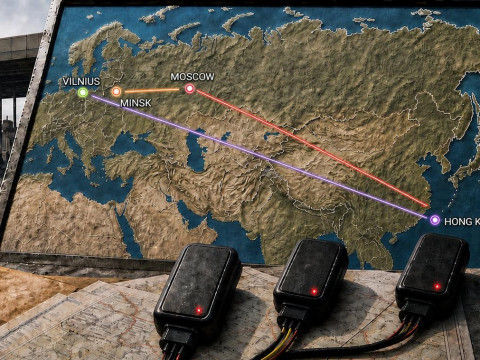
Green-Chip supplied electronic equipment from Germany to Belarus. From 2023-2024, the company sourced it from Hong Kong, China, and Thailand via the Hong Kong-registered company Dauking Technology Co., Limited. The same company supplied Green-Chip with sanctioned goods of Swiss, American, British, and French origin.
The BIC previously found that Green-Chip purchased microchips in Belarus while its clients cooperated with Russian authorities and enterprises in the military-industrial complex.
During a telephone conversation with a BIC correspondent, the company confirmed its ability to supply chips from the United States and Europe. Shortly before that, Green-Chip came under U.S. restrictions. Meanwhile, Dauking Technology Co., Limited is still not included in any sanctions list.
In 2022-2023, BLM Synergy LLC received German helium leak detectors — devices used to locate tiny leaks — from the Indian company Ayush Technologies. Then, BLM Synergy LLC supplied the same goods to Belarus.
BLM Synergy's clients included government institutes and research centers.
For instance, the company supplied leak detectors to the National Research Center Kurchatov Institute, a nuclear physics and nanotechnology research center involved in atomic weapons development. In October 2024, the U.S. imposed sanctions on BLM Synergy for selling industrial equipment used by Rostec.
"The main constraint on sanctions effectiveness tends to be structural," says Allen Maggard. "Agencies tend to be under-resourced relative to their global mandate, which limits enforcement capacity more than any lack of intent. This is compounded by limited data visibility — especially in opaque jurisdictions and increasingly restricted Russian records — which makes it difficult and time-consuming to trace and substantiate supply chain links."
At the opposite end of the chain
The supply chain that begins in Hong Kong, passes through Russia to Belarus, and then returns to Russia came to an end for Natallia from Nikopol on the morning of November 17, 2025. On the day of the shelling, Yevhenii stepped out of his car to smoke during a break between driving lessons. It all happened so quickly. The shell hit the curb, and a piece of shrapnel hit him in the stomach. Forty minutes later, the man died.
By the time this investigation was published, Natallia had been living without her husband for almost six months. The need to care for her son and elderly mother helps her hang on.
“How am I feeling? Like an orphan. Yeah, like an orphan,” Natallia says bitterly.
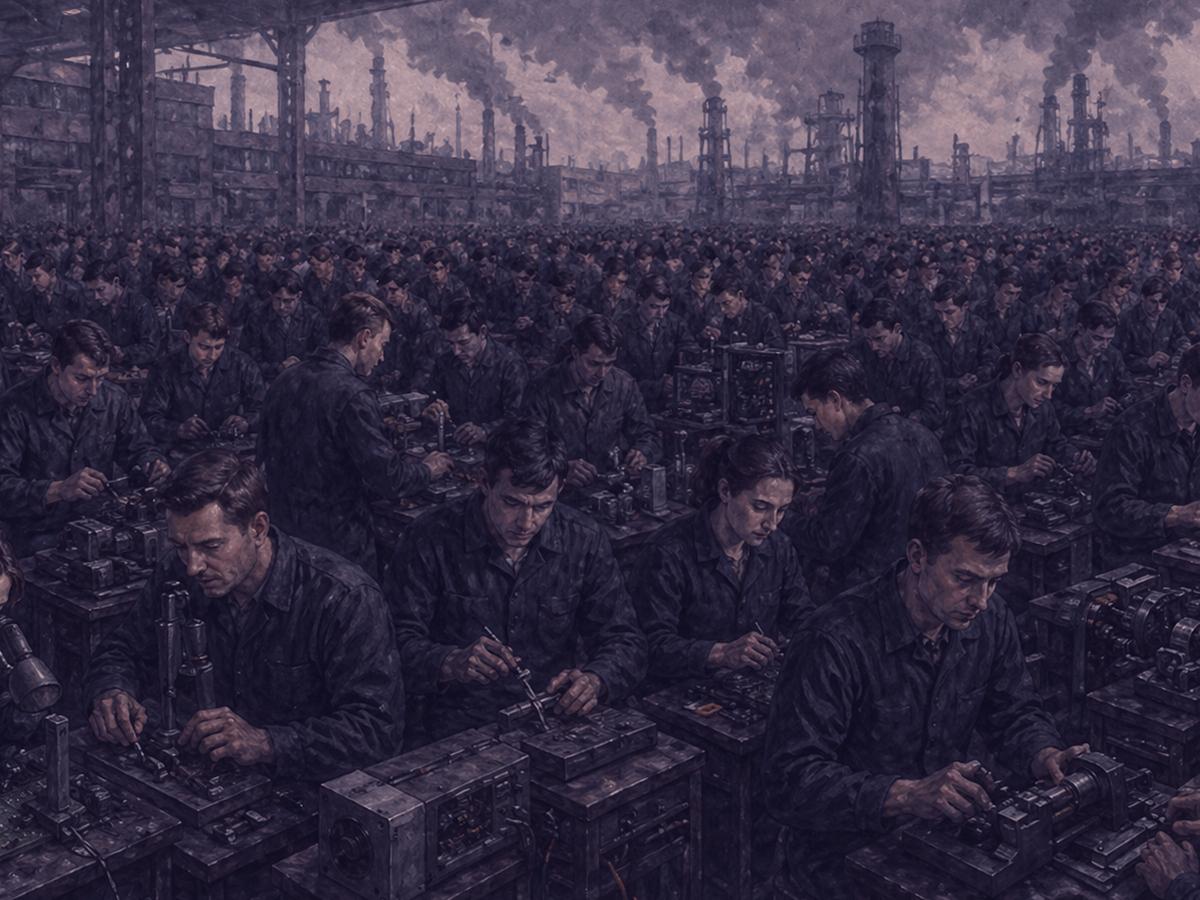
When we are about to say goodbye, Natallia asks us to stay a little longer. She wants to appeal to Belarusians employed by companies that supply components to Russian arms manufacturers. The BIC estimates that nearly 38,000 people are employed in this type of production.
“They work to earn a paycheck and feed their families, right? I get that. I just wish these people would realize that this is the price of it all.”
According to a report by the UN Human Rights Monitoring Mission in Ukraine, more than 15,000 civilians have been killed, more than 41,000 have been injured, and millions have been displaced from their homes in Ukraine since Russia’s full-scale invasion began in February 2022.
We sent inquiries to all subjects involved in this investigation, as well as the State Authority for Military Industry. Responses received within the requested timeframe are included in the text. No comments were received from the other recipients.
This investigation is part of a series of publications about the cooperation between Belarusian companies and Russian arms manufacturers.

Both entities are owned by a businessman from Belarus.

The group includes developers of UAVs with companies based in the US and EU, companies that modernize military equipment, and a family-owned enterprise.
This article was produced within the framework of MOST – Media Organisations for Stronger Transnational Journalism, a Journalism Partnership funded by the Creative Europe programme that supports independent media specialising in international reporting.

![[*]](/storage/page_blocks/May2026/1.png)
![[*]](/storage/page_blocks/May2026/2.12.png)
![[*]](/storage/page_blocks/May2026/2.2.2.png)
![[*]](/storage/page_blocks/May2026/34.png)
![[*]](/storage/page_blocks/May2026/42.png)