


The Main Discovery
The investigation documents that Belarusian sanatoriums have been systematically hosting veterans of Russia's war against Ukraine since 2023, even though Belarus officially denies direct participation in the conflict.
Testimonies from Participants
BIC journalists managed to speak with Anton Kubasov, a 41-year-old sniper-scout from the 488th Motorized Rifle Regiment who fought near Kreminna in the Luhansk region. He underwent rehabilitation at the Lepel Military Sanatorium from November 20 to December 10, 2024, and was highly impressed with the conditions.
Another patient at the sanatorium was Andrey Polzokhnovsky from Pskov, who returned from the war without a leg but with an Order of Courage medal and three million rubles in compensation. He was staying at the same sanatorium simultaneously with Kubasov.
Official Confirmation
A marketing department employee at the Lepel Military Sanatorium confirmed to BIC journalists (who posed as workers from a Russian state media outlet) that this category of Russian citizens has been receiving treatment annually since 2023. The military personnel don't pay for their stays - vouchers are provided by government agencies and charitable organizations, including the "Defenders of the Fatherland" Foundation, headed by Russian Deputy Defense Minister Anna Tsivileva.
Legal Framework
The program operates under a 2011 resolution of the Union State Council of Ministers, which was amended in 2022 to include "veterans of military operations, including those in another country" among eligible recipients.
Expansion Plans
Russian and Belarusian authorities are discussing a major expansion of the program. Leningrad Region Governor Alexander Drozdenko and Belarus First Deputy Prime Minister Mikalai Snapkou agreed to create a rehabilitation program under which at least 800 Russian servicemen and their family members annually will receive treatment at Belarusian sanatoriums.
Alexander Lukashenko personally expressed readiness to support this initiative, while not mentioning that Belarus has already been hosting war participants for three years.
Context
This investigation adds to BIC's series of materials documenting how Belarus creates para-military infrastructure to support Russian aggression: helping circumvent sanctions, creating filtration camps, and secretly treating wounded soldiers from elite Russian units in its hospitals.
Although Belarus is not officially involved in Russia's war against Ukraine, the country's authorities are systematically serving the Kremlin by establishing a military-adjacent infrastructure. Previous investigations by the BIC have shown how Minsk helps Moscow to circumvent sanctions and create filtration camps, as well as secretly treating wounded soldiers from elite Russian units in its hospitals. This time, we have confirmed that, over the past three years, veterans of the “special military operation” (SMO) have been undergoing treatment programmes in Belarusian sanatoriums.
Electrophoresis for the sniper
Anton Kubasov, a former SMO participant, was offered massage chairs, a salt-breathing room, electrophoresis, and other procedures at the Lepel Military Sanatorium of the Armed Forces of the Republic of Belarus. The Russian himself revealed this information to a BIC journalist who contacted him posing as an employee of a Belarusian state-owned media outlet. We found this man while searching for confirmation that Belarusian health resorts accept Russian soldiers.
Kubasov is now 41 years old. He says he feels unwell and is worried about the deterioration of his joints. He underwent rehabilitation in Belarus from 20 November to 10 December last year, as part of a group of veterans.
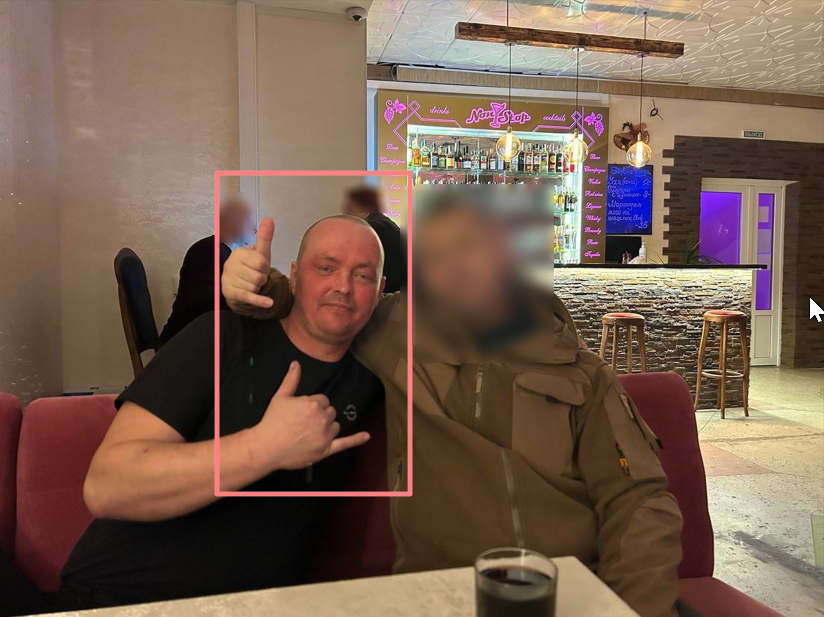
"I had a great time [at the Lepel Sanatorium]. Firstly, we received the highest level of service. The food is awesome. I enjoyed all the entertainment events that were organised. Russian [sanatoriums] do not measure up", Kubasov shared.
During our conversation, he admitted that he had served as a sniper scout with the 488th Regiment, part of the 144th Guards Motorised Rifle Division in the Smolensk region. Kubasov added that he had participated in the battles for Kreminna in the Luhansk region, which has been under Russian occupation since mid-April 2022.
"One of the few who survived there" is how the man described himself. The exact number of civilians who did not survive the Russian troops' storming of the town is not yet known. On the second day of fighting for Kreminna, Serhiy Hayday, then head of the regional state administration, gave a figure of 200 people, but stressed that it could be higher, as it had been impossible to evacuate the population during the capture. Those who attempted to leave the city independently were targeted.
Mutilated, yet well-off
Kubasov complained that a voucher to a Belarusian sanatorium was his only reward for participating in the war against Ukraine. He did not receive any medals or payments. This contrasted with another guest at the Lepel Sanatorium, Andrey Polzakhnovsky, who came from Pskov. He returned from the war in Ukraine missing a leg; however, according to the news outlet Sever.Realii, he was awarded the Order of Courage and 3 million Russian rubles ($32,000) in compensation for his injury. He is now 24 years old.
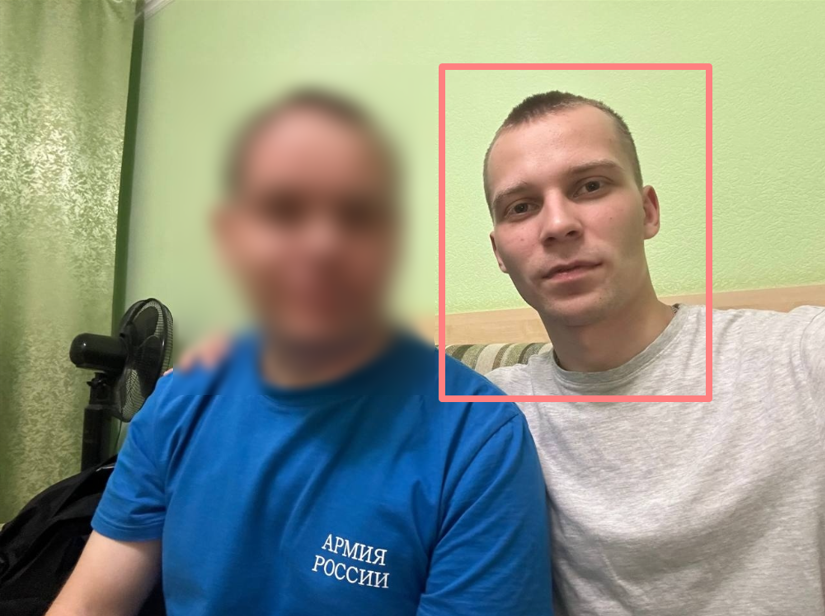
Polzakhnovsky stayed at the Lepel Sanatorium at the same time as Kubasov. The Russian Foundation "Defenders of the Fatherland" published photos of him inside the Belarusian institution. Polzakhnovsky's public expression of gratitude to the organisers of the treatment provided further confirmation that soldiers fighting against Ukraine are undergoing rehabilitation in Belarus.
We tried to talk to the Russian military man, but couldn't get through to him. In October 2022, he voluntarily joined the fight against Ukraine to earn money. He does not regret his decision. Moreover, were it not for his mother's protest, he would have returned to the war — at least, that is what he told journalists at Sever.Realii in 2023.
Three years — without publicity
The Lepel Military Recreation Centre, which falls under the jurisdiction of the Ministry of Defence of the Republic of Belarus, has been hosting individuals such as Kubasov and Polzakhnovsky since 2023. We were informed of this by the institution's marketing department. We called there, impersonating the journalists of the state media, but on this occasion the Russian one.
“This category of citizens from the Russian Federation undergoes rehabilitation and treatment at our facility every year”, a recreation centre staff member said.
The Russian military men do not pay for their treatment and stay. Government agencies and charitable organisations issue vouchers to them. One of these is the Defenders of the Fatherland Foundation, headed by Anna Tsivileva, the Deputy Minister of Defence of the Russian Federation, and, according to the Russian outlet Verstka, a relative of Vladimir Putin. According to the sanatorium staff member, the basis for providing such services is an agreement with the Standing Committee of the Union State: “This applies not only to the SMO. It also includes veterans of the Great Patriotic War, as well as Afghan war veterans”. She declined to answer further questions, saying that “the format in which this information can be provided must first be discussed with the head of the centre”.
The agreement that our interlocutor recalled is most likely related to the organisation of health resort treatment, as set out in the 2011 resolution of the Council of Ministers of the Union State. Initially intended for people with disabilities and veterans of the Great Patriotic War, the document was updated in 2022. The list of people who have the right to receive health resort treatment at the expense of the Union State budget has been expanded to include people with disabilities and veterans of military operations, including those in another country. This official document outlines the provisions for Russian military personnel to take their holidays at health resorts in Belarus.
In 2024, three Belarusian sanatoriums took part in implementing the programme: the aforementioned Lepel Military Sanatorium, Chabarok, and Sasnovy Bor, as well as the two Russian recreation centres, Peredelkino and Karacharovo.
Financing is provided from the Union State budget. This year, 26 million Russian rubles (about 950,000 Belarusian rubles, or about $312,000) were allocated to meet veterans' health needs. In 2024, the figure decreased to 877,000 Belarusian rubles for 389 vouchers, of which 180 were allocated specifically for Belarusian health resorts. The number of these for soldiers who fought against Ukraine is unknown.
Lukashenko is ready to help
Belarusian recreation centres may soon be filled with hundreds of former SMO members. A special programme to provide rehabilitation assistance for former veterans of the war against Ukraine is being discussed by the Russian and Belarusian authorities. The Governor of the Leningrad region, Aleksandr Drozdenko, is part of these efforts. At the end of September, he visited Belarus. First Deputy Prime Minister Mikalai Snapkou met him.
Meanwhile, his wife, Irina Drozdenko, the head of the Vsevolozhsk Multicenter for Social and Labour Integration, visited recreation and resort facilities in the Minsk Region, where she held talks with the leadership of the Mahilou Regional Executive Committee. Consequently, an agreement was reached to establish a rehabilitation programme for Russian military personnel and their families at recreation centres in Belarus. It is estimated that at least 800 people will undergo rehabilitation in our country each year. The Committee for Social Protection of the Leningrad Region is currently working out the conditions. Mikalai Snapkou has already approved the initiative, according to reports in the Russian media. However, the Belarusian state media has not paid attention to these plans. [*]
For several years now, the Belarusian and Russian sides have been discussing the possibility of sending participants in the war against Ukraine to our recreation centres. Aleksandr Drozdenko had already raised this issue at a meeting with Mikalai Snapkou in September 2023. At that time, the Governor of Leningrad complained that Russia lacked its own resources. Last year, Drozdenko personally proposed to Aleksandr Lukashenko the idea of using Belarusian resorts for the rehabilitation of Russian soldiers. The latter expressed his willingness to help without mentioning that Belarus has already opened recreation centres for former veterans of the war in Ukraine.
We have sent inquiries to the Defenders of the Fatherland Foundation, the Lepel Military Sanatorium, and the Belarusian Ministry of Health, asking them to comment on how many former SMO members have been rehabilitated in Belarusian recreation centres and on the current status of the joint assistance programme. None of them had responded at the time of publication.

![[*]](/storage/page_blocks/December2025/412.jpg)